Management Reporting Redesign
We redesign your management reporting from the ground up — structure, content, KPI framework, and production process — so that every report drives a decision, not a conversation about the numbers themselves.
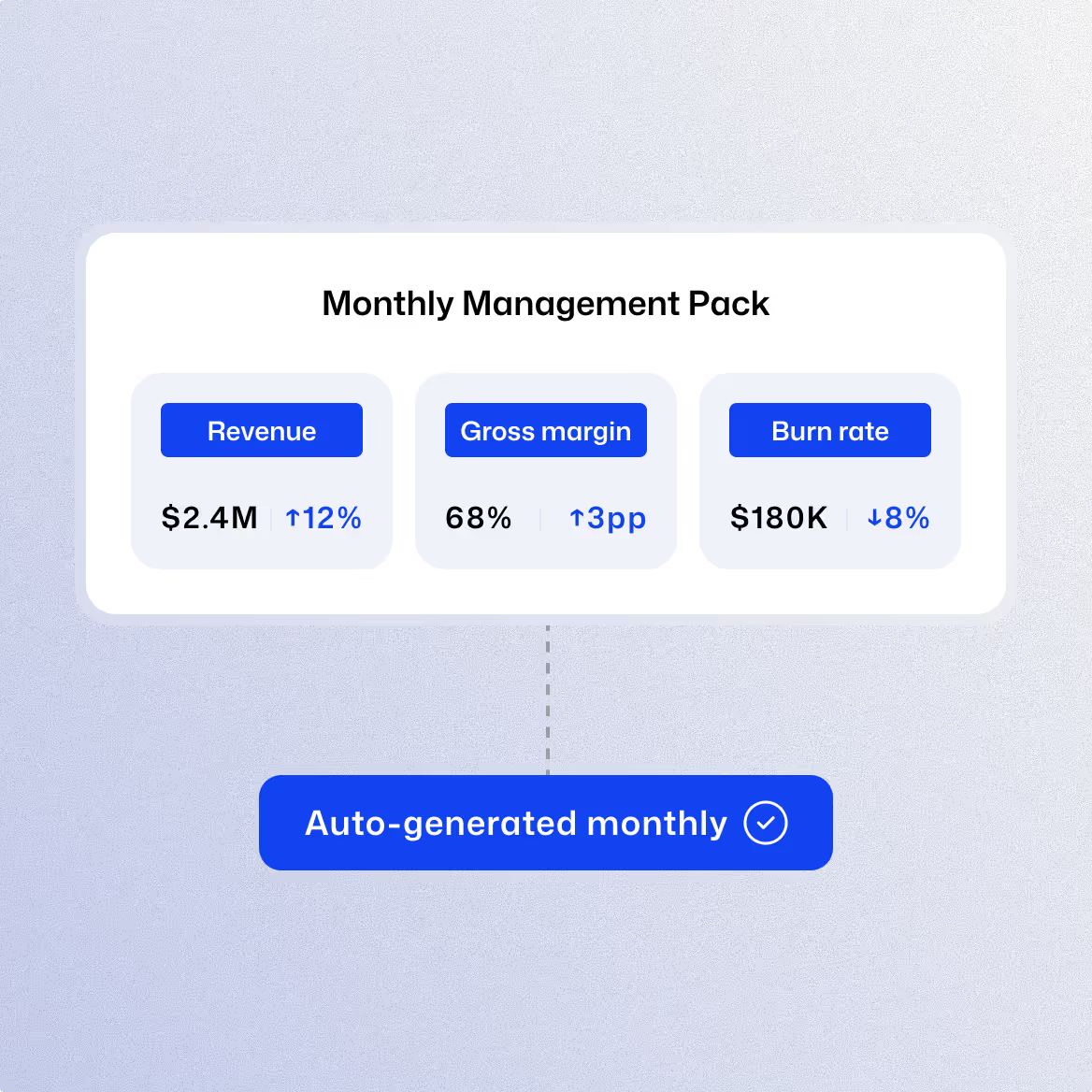
Most management reporting answers the wrong questions. The right ones don't get asked because the data isn't there to answer them.
Reports that describe, not decide
The management pack shows what happened last month. It doesn't show why, what it means, or what to do about it. Leadership reviews the numbers, has the same questions they had last month, and makes decisions on the same incomplete basis they always have.
A reporting pack that was designed for a different business
The current management report was built years ago for a business that looked different. New business units, new geographies, and new revenue models have been patched on. The structure no longer reflects how the business actually operates or how leadership needs to review it.
Different numbers in every report
The management pack, the board pack, and the operational dashboards all show different versions of the same metrics. Reconciling them is the first agenda item at every review meeting — and it shouldn't be. When the CFO spends the first 20 minutes of a board meeting explaining variances between documents, the reporting has failed.
Reporting production that consumes disproportionate CFO time
Every month the same reports are rebuilt manually. Data is extracted, transformed, formatted. It takes days, it involves the same people every time, and one error in the process means the wrong numbers go to leadership. That's not a reporting problem. It's an infrastructure problem.
What changes when we're done
From current reporting to redesigned management infrastructure in 16 weeks.
Reporting Audit & Requirements Mapping
Current management reports reviewed against the decisions they're meant to support. Structured interviews with report consumers — CFO, CEO, and business unit leads. Every gap in content, structure, KPI definition, and data consistency mapped.
Framework & Architecture Design
Reporting framework designed. KPI architecture defined. Dashboard structure specified. Data model requirements identified and validated against your existing architecture.
Build & First Live Cycle
Report templates built, production process documented, and first management pack produced on the new framework — with incro alongside for the first cycle.
This service fits if
Leadership reviews the reports but doesn't use them to decide
The management pack is read and filed. Decisions are made in conversations that reference the numbers informally. The reporting isn't structured to drive action — and leadership has quietly stopped expecting it to.
Reporting production is a recurring manual project
The same reports are rebuilt each month by the same people. Extraction, transformation, formatting, checking. A significant proportion of finance capacity goes to production rather than to the analysis the production is supposed to enable.
You need a single version of truth across the business
Different functions, entities, and leadership audiences are working from different versions of performance data. A unified reporting framework with a consistent KPI architecture resolves that — and makes investor reporting and board reporting significantly easier.
A new investor or ownership structure requires better visibility
PE owners, strategic investors, or a board that includes external members are asking for financial and operational visibility that the current reporting can't consistently produce. The reporting needs to be rebuilt for the audience now in the room.
Management reporting is the primary interface between the finance function and the business. When it's built correctly, it drives decisions. When it isn't, it drives conversations about the numbers instead.


Your management reporting is the most regular signal the business gets from finance. Make sure it's the right one.
30 minutes. We'll review what your current management reporting communicates — and what it should.
What CFOs ask before they engage
Our leadership team has specific reporting preferences. Can you work with those?
Yes — and understanding what each audience needs to decide is the starting point for the design. We run structured interviews with report consumers as part of the requirements phase. The reporting framework follows from those decisions, not from what finance finds easiest to produce.
How do you align on a single KPI framework when different functions calculate things differently?
That's typically the hardest part of a reporting redesign — and the most valuable. We run a structured KPI definition process that involves finance, commercial, and operations, and produces a single governance document that everyone works from. The debates that happen during that process are the ones that need to happen. Better in a design session than in a board meeting.
What happens to existing reports during the transition?
We maintain continuity of existing reporting during the design and build phase. The transition to the new framework is sequenced around your reporting calendar — no reporting cycle is disrupted while the change is being implemented.
Can this connect to a BI or dashboard implementation?
Management reporting redesign is often the prerequisite for a BI implementation. Building dashboards on top of a poorly designed reporting framework embeds the problem rather than solving it. We sequence reporting design before BI build — so the dashboards reflect how the business is actually managed.