BI & Reporting Development
We design and build the BI and reporting systems that turn your financial data into decisions — automated, consistent, and built to serve the actual reporting needs of your finance function and business leadership.
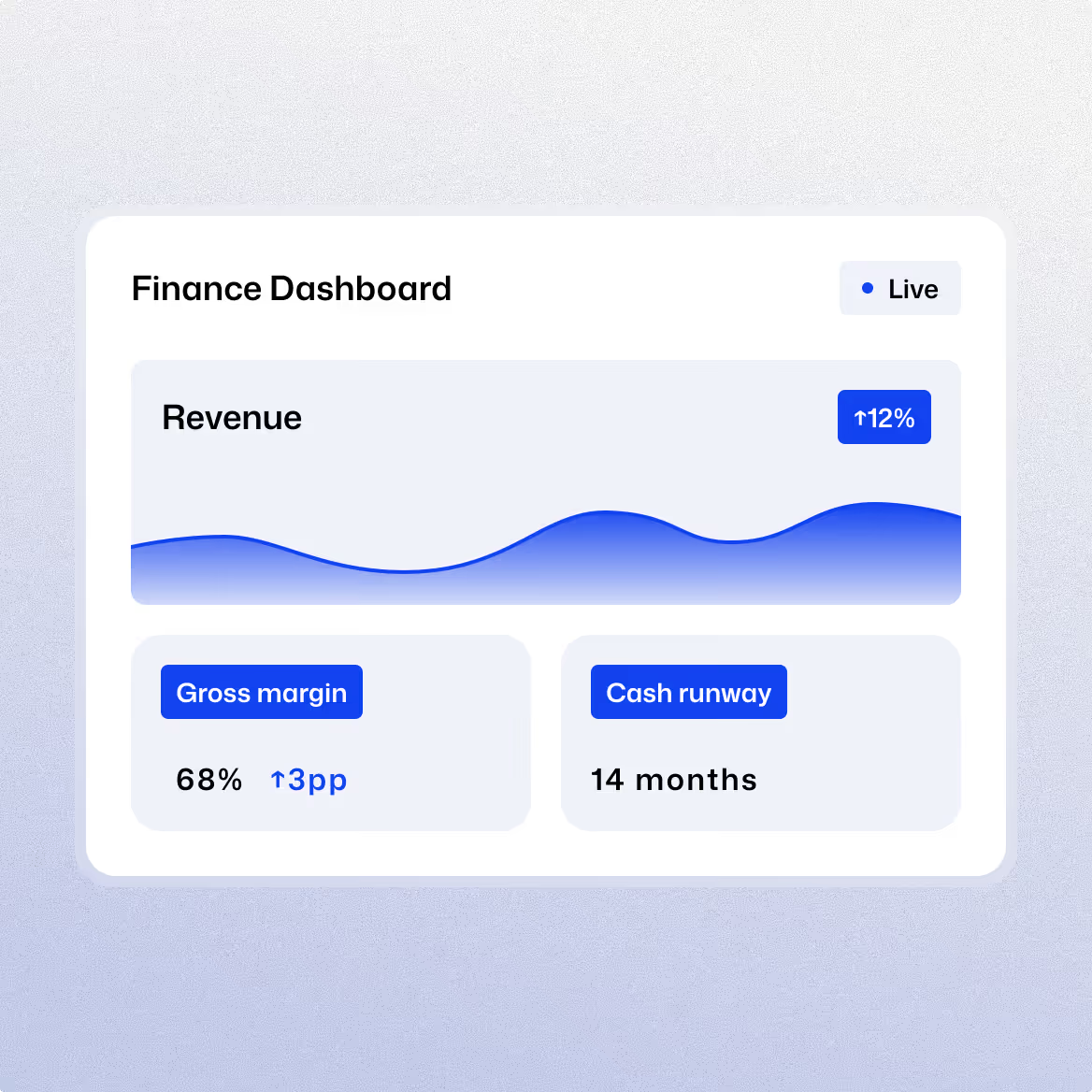
Most BI implementations produce dashboards. Few produce decisions. The difference is in what was built before the dashboards.
Dashboards that nobody uses
BI tools were implemented. Dashboards were built. But adoption is low because the outputs don't map to how management actually reviews performance. Technology that doesn't fit the decision-making process doesn't get used — regardless of how well it was technically built.
Different numbers across reporting outputs
Management pack, board pack, and operational dashboards all show different versions of the same metrics. Reconciling them is the first agenda item at every review meeting — and the CFO knows before every board meeting that someone is going to ask why the numbers don't tie.
Reports rebuilt manually every cycle
Monthly and quarterly reports are produced by extracting data, transforming it manually, and formatting it in a template. The same work, every cycle, by the same people — with no automation, no time saved, and a reconciliation risk every time the process runs.
Reporting that can't accommodate change
A new business unit, a new KPI, or a change in reporting structure requires significant rework. The reporting infrastructure is fragile — it works until the business changes, and then it breaks.
What changes when we're done
From reporting requirements to live BI infrastructure.
Requirements & Architecture Review
Reporting requirements mapped across all user groups. Existing data architecture reviewed for BI readiness. Technology platform assessed or selected. Build scope defined precisely before development begins.
Development & Iteration
Reporting layer built iteratively — core outputs first, then extended views. Finance and business stakeholders involved in review cycles throughout development. Every output validated against source data before release.
Deployment & Handover
Full deployment to production environment. User training completed. Reporting governance framework established. First live reporting cycle completed with incro alongside.
This service fits if
Reporting production consumes too much finance capacity
A significant proportion of FP&A and finance team time goes to producing reports that could be automated. The constraint is technology design, not team capability — and it doesn't get better as the business scales.
Your current BI implementation underdelivered
Tools were implemented but adoption is low, outputs are inconsistent, or the reports don't reflect how management actually reviews the business. The problem is design — and it's fixable without replacing the platform.
You're consolidating reporting across a group
Multiple entities, each with their own reporting outputs, need to be brought into a unified reporting infrastructure. Consistency, automation, and a single source of truth are the requirements.
Leadership or investors need better visibility
PE owners, board members, or senior management have flagged that financial and operational visibility isn't good enough. Current reporting doesn't give them what they need to govern or manage the business effectively — and that gap has consequences.
BI and reporting infrastructure built on a clean data architecture delivers consistent, automated outputs across management, board, and operational audiences. Built without that foundation, it delivers dashboards that nobody trusts.


Reporting infrastructure that runs itself gives your finance team its time back.
30 minutes. We'll assess your current reporting setup and tell you what a properly built BI infrastructure would change.
What CFOs ask before they engage
Which BI platforms do you work with?
We work across the major enterprise BI platforms — Power BI, Tableau, Looker, and others — as well as finance-specific reporting tools. Platform selection is driven by your existing technology landscape, team capability, and reporting requirements. We don't have a platform preference that overrides what's right for your context.
We already have Power BI deployed. Can you improve what we have?
Yes. We assess the existing implementation against your reporting requirements and data architecture. In most cases the platform is adequate — the issue is the data model, the report design, or the governance framework. We rebuild what needs to be rebuilt rather than replacing what's working.
How do you ensure adoption after deployment?
By involving report consumers — finance leadership, business unit heads, board members — throughout the design and development process. Reporting infrastructure built from user requirements gets used. We also build training and change management into every deployment.
What if our data architecture isn't ready for BI development?
We'll tell you at the outset and scope the data architecture work that needs to precede the BI build. Developing reporting on top of an inadequate data foundation creates outputs that are unreliable and expensive to maintain. We sequence the work correctly — data architecture first, BI development second.