Group Finance Integration
We design and implement unified finance infrastructure across your group — consolidating reporting, aligning chart of accounts, and integrating systems so the whole operates with the financial clarity a group-level CFO actually needs.
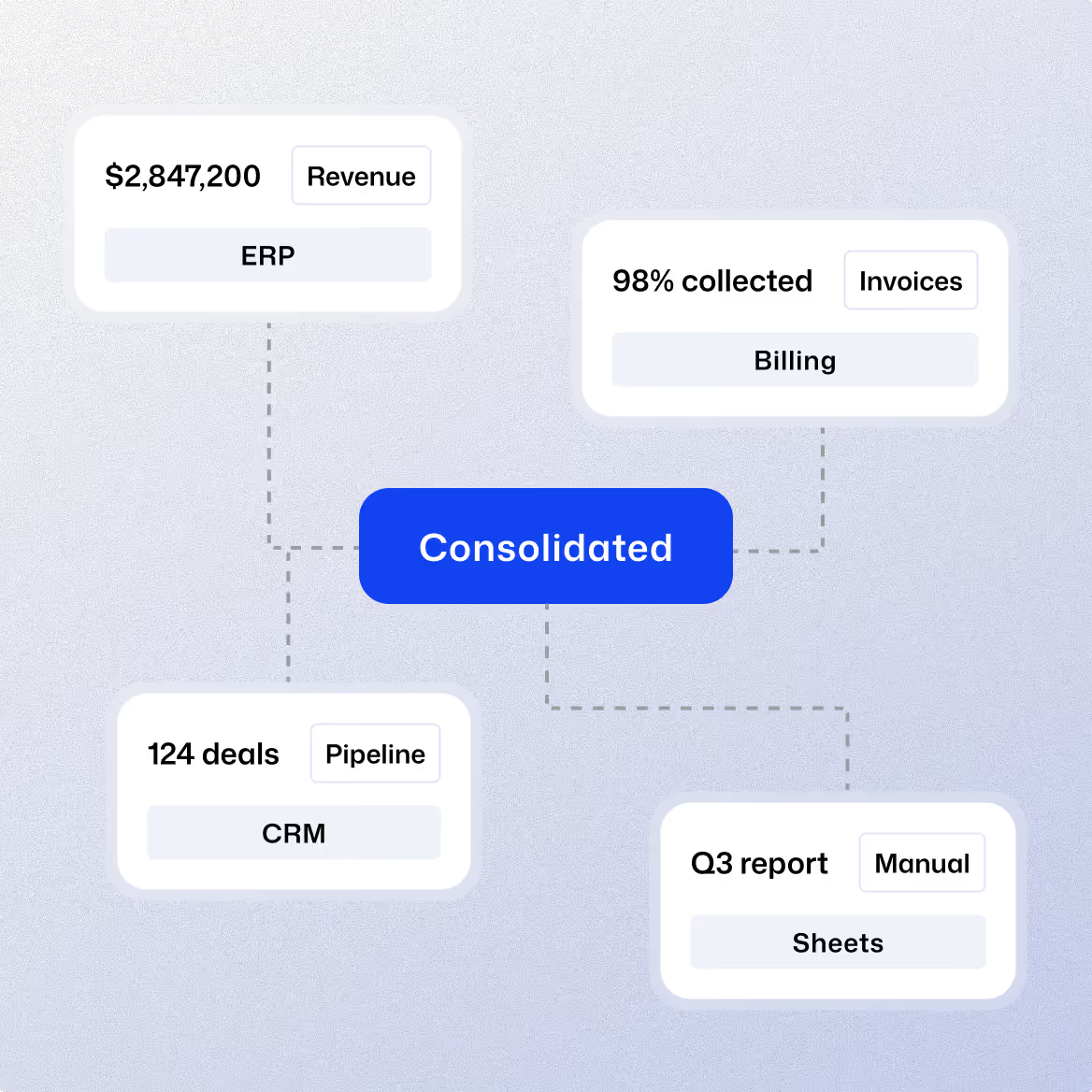
Groups that grow faster than their finance infrastructure pay for it in every reporting cycle. And in every board meeting.
Consolidation that takes weeks
Each entity closes on a different timeline, using a different chart of accounts, different definitions, different tools. Group reporting is an assembly exercise — manual, slow, and prone to errors that surface at the worst moments. The board gets numbers late, and nobody is fully confident in them.
Subsidiaries running on disconnected systems
Acquired entities or new market operations run their own finance processes, systems, and reporting cadences. Integration was planned but never completed — or was completed poorly. The cost of that gap compounds every quarter, in reporting time and in investor reporting credibility.
No single version of group performance
Intercompany eliminations are manual. Segment performance is approximated. KPIs mean different things in different entities. The group CFO is managing a picture that nobody fully trusts — and presenting it to investors who are trying to.
Chart of accounts that can't produce group truth
Local entities use account structures built for local statutory purposes, not for group management reporting. Every consolidation cycle requires manual remapping. There's no version of group performance that anyone would stake a board presentation on.
What changes when we're done
From fragmented group to unified finance infrastructure.
Group Diagnostic
We map the current state across all entities — chart of accounts, accounting policies, closing processes, system landscape, reporting structure, and intercompany flows. Every gap and integration point identified before design begins.
Design & Architecture
Unified chart of accounts designed. Consolidation model built. Reporting architecture defined. Accounting policies aligned. Every design decision validated with group finance leadership before build begins.
Implementation & Rollout
Consolidation model and reporting architecture implemented. Subsidiary onboarding sequenced by priority. Finance teams trained. First consolidated close on the new infrastructure completed with incro alongside.
This service fits if
Your group has grown faster than its finance infrastructure
Acquisitions or organic expansion have created a group structure the finance function hasn't unified. Consolidation is manual, slow, and dependent on a small number of people who hold it together each cycle.
Group reporting takes too long to be useful
Your consolidation cycle runs to weeks. Board reporting is always late or always caveated. The group CFO spends more time producing the numbers than using them — and investor reporting suffers for it.
A recent acquisition hasn't been financially integrated
An acquired entity is still running its own processes, chart of accounts, and reporting structure. The integration was scoped but not completed — or was completed in a way that doesn't produce clean group numbers.
Investors or ownership are asking for better group visibility
PE owners, strategic investors, or a board that includes external members are asking for group-level financial performance at a level of granularity and consistency the current infrastructure can't reliably produce.
We've unified finance infrastructure across multi-entity groups in tech, logistics, production, and e-commerce — including businesses with entities across multiple countries and currencies. The cost of not doing this compounds with every acquisition and every reporting cycle.

Every quarter without unified group infrastructure is a quarter of reporting you can't fully trust.
30 minutes. We'll map what your group integration would involve and what the first consolidated close on a properly built infrastructure would look like.
What CFOs ask before they engage
We have SAP at group level. Can you work within our existing system landscape?
Yes. We design integration architecture around your existing systems — SAP, NetSuite, or others at group level — and build the data flows and consolidation logic that connect subsidiary systems to them. We don't replace your core infrastructure; we make it work across the group.
How do you handle subsidiaries with regulatory reporting requirements in different jurisdictions?
Local statutory requirements are mapped during the diagnostic phase. The unified framework accommodates group reporting needs while preserving the local reporting structures each entity requires. We've done this across multi-jurisdiction groups in Europe and beyond — the two requirements don't need to conflict.
What if some subsidiaries are resistant to standardization?
We design for it. The implementation approach distinguishes between what must be standardized for group integrity and what can remain locally adapted. The chart of accounts and consolidation logic need to be consistent. Everything else is negotiable.
How do you handle a group where some entities were acquired and have different accounting policies?
Accounting policy alignment is part of the integration work — not an afterthought. We map the policy differences across entities, identify where misalignment is affecting group reporting quality, and implement a consistent framework that produces numbers the group CFO can stand behind.