Finance Process Automation
We identify, design, and automate the high-volume, rule-based processes in your finance function — reducing manual effort, eliminating error, and freeing your team for the work that actually requires human judgment.
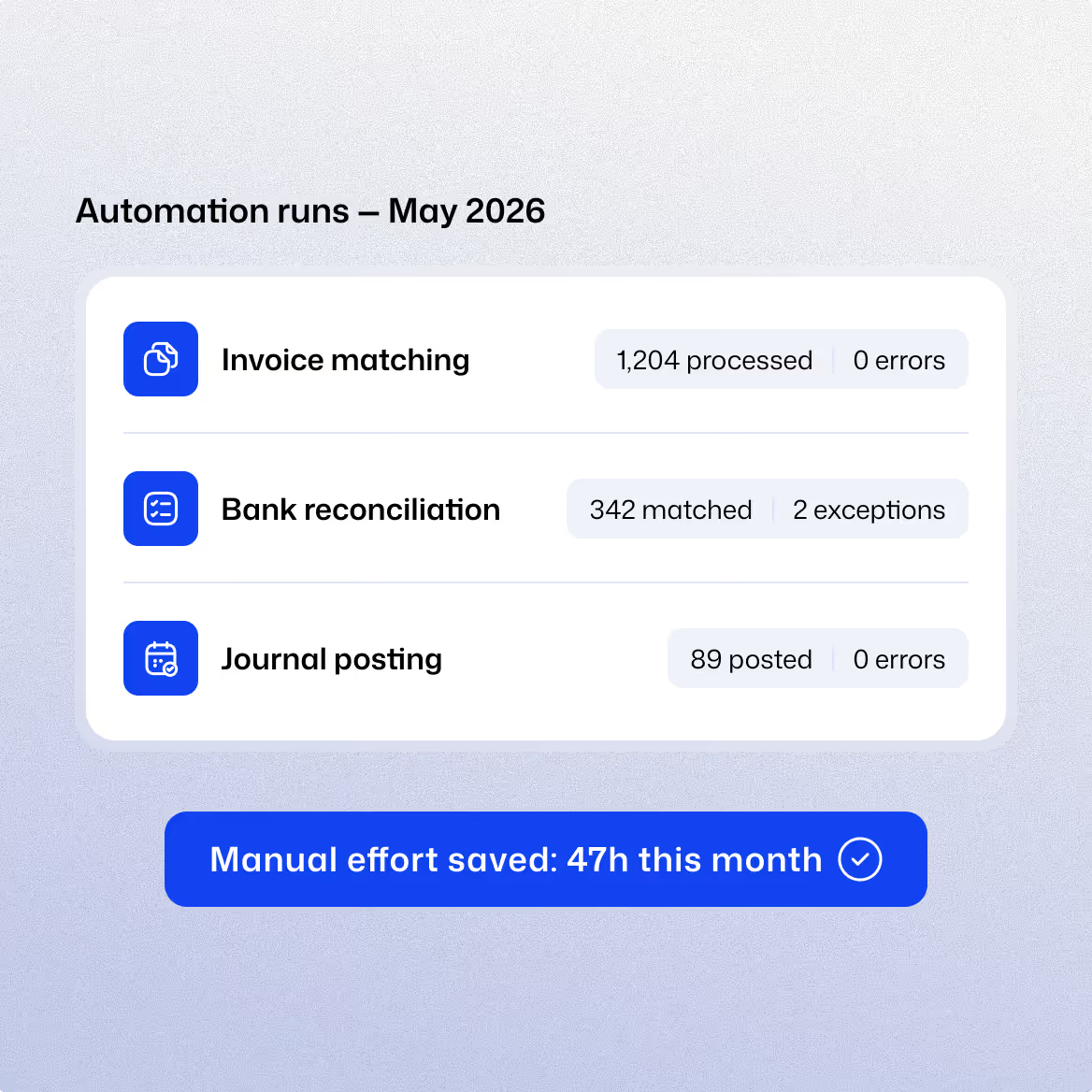
Manual process in finance isn't just inefficient. It's a source of risk that grows with every entity you add and every cycle you run.
High-volume processes still running on spreadsheets
Reconciliations, accruals, intercompany eliminations, expense allocations — processes that run every month, follow fixed rules, and consume significant finance time. The logic is deterministic. The execution is still manual. That's not a resource problem — it's a design problem.
Error rates that grow with volume
Manual processes introduce errors at a rate proportional to volume and complexity. As the business grows, the error surface grows with it — and the controls required to catch those errors consume as much time as the process itself.
A close cycle that can't compress
Month-end close takes as long as it takes — because manual handoffs, sequential dependencies, and spreadsheet-based processes set the pace. The close cycle is a function of process design, not team effort. Effort can't compress it. Automation can.
Process knowledge concentrated in individuals
Critical finance processes operate because specific people know how they work and execute them each cycle. That's institutional knowledge as operational risk — and it doesn't scale, transfer, or survive a departure.
What changes when we're done
From process inventory to automated finance operations.
Process Inventory & Prioritization
Every manual finance process inventoried. Automation readiness assessed — volume, rule complexity, data availability, and error rate. High-value automation candidates identified and sequenced by impact and feasibility.
Automation Design & Build
Automation logic designed, documented, and validated with process owners before build. Processes automated iteratively — highest impact first. Testing against real data throughout.
Deployment & Stabilization
Automated processes deployed to production. First live cycle completed with monitoring active. Exception rates tracked and tuned. Handover to internal ownership completed.
This service fits if
Your close cycle is consistently too long
Month-end close takes longer than the business needs it to. Manual processes, sequential dependencies, and spreadsheet-based workflows set the pace. The constraint is process design — and the goal of closing books within five days of month end is achievable once it is.
High-volume manual processes are a known risk
Reconciliations, allocations, and intercompany processes run manually every month — with known error rates and known dependency on specific individuals. The risk is understood. The automation hasn't happened.
Finance headcount is growing with transaction volume
As the business scales, manual finance processes scale with it — requiring proportional headcount growth. Automation breaks that relationship and allows the finance function to scale without proportional cost growth.
A new ERP or system implementation is planned
An ERP implementation or system change is the right moment to design and automate finance processes properly — rather than migrating manual processes into the new system unchanged and inheriting the same problems in a new environment.
Finance process automation delivers compounding returns — reduced effort, reduced error, and a finance function that scales without proportional headcount growth. The close cycle is where clients feel it first.


Every manual process your finance team runs this month will run again next month. And the month after.
30 minutes. We'll identify which processes in your finance function are ready for automation and what the impact on your close cycle and team capacity would be.
What CFOs ask before they engage
What technology do you use for automation?
The technology choice is driven by your existing system landscape and the specific processes being automated. We work across RPA platforms, native ERP automation capabilities, Python-based data pipelines, and workflow automation tools — selecting what's appropriate for each process rather than applying a single platform to everything.
What happens when an automated process fails?
Exception handling and failure management are designed into every automation from the outset. Exceptions are routed to defined owners, with escalation paths and resolution timelines. Automation failure should be a managed exception with a defined response — not an undetected risk that surfaces when the numbers don't reconcile.
How do you ensure automated processes remain accurate as the business changes?
We build process documentation and maintenance frameworks into every automation deployment. When business rules change — chart of accounts updates, new entities, revised allocation logic — the maintenance process is defined and owned. Automation that isn't maintained degrades; we design for maintenance from the start.
Can you automate processes that currently run in Excel?
Yes — and this is the most common starting point. Excel-based processes are inventoried, the logic is documented and validated, and automation is built against the verified logic. The Excel files are retired, not migrated.