FP&A & Controlling Process Build
We redesign and build your FP&A and controlling processes from the ground up — structured planning cycles, robust controlling frameworks, dedicated forecasting models, and the analytical infrastructure that connects financial data to business decisions.
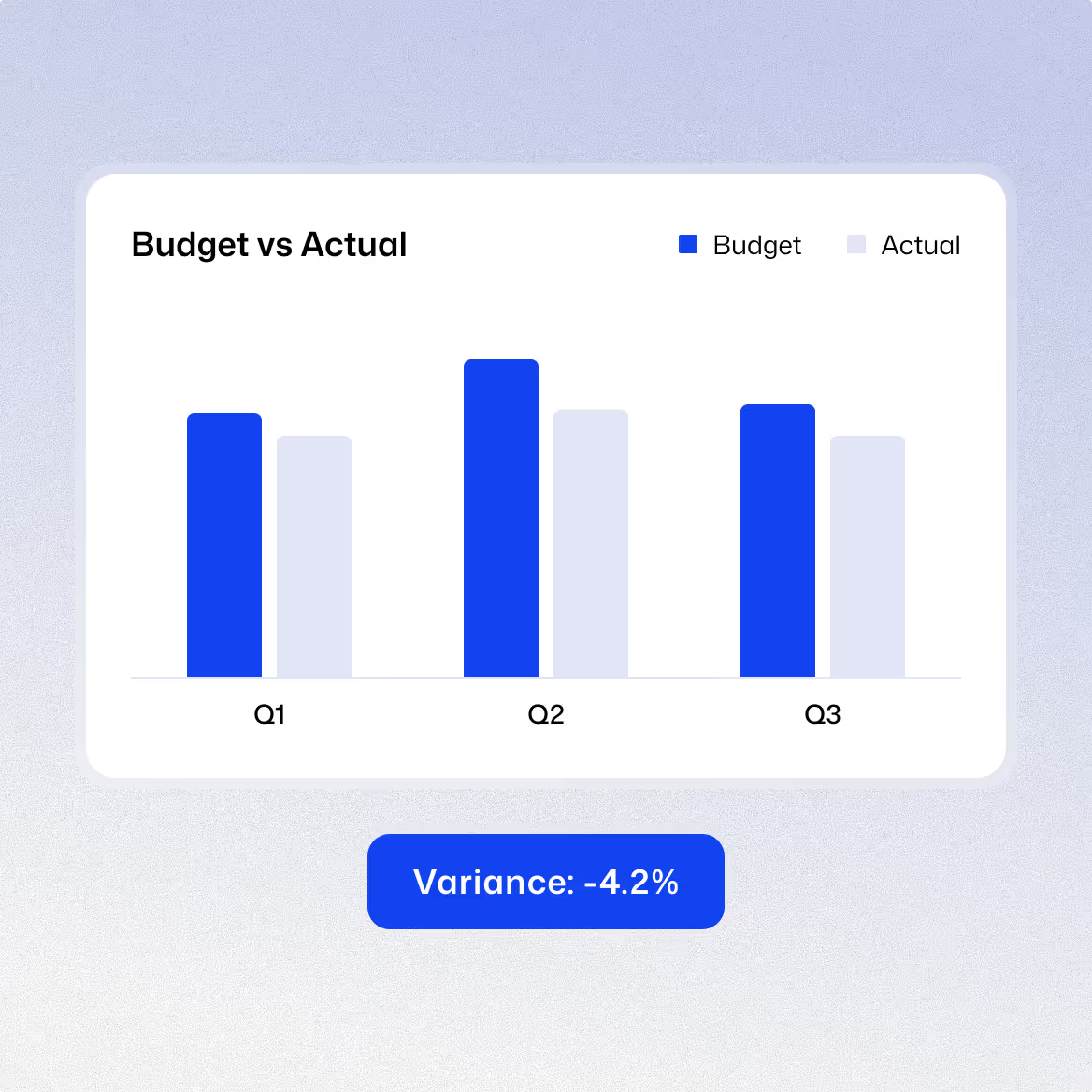
FP&A that spends most of its time producing numbers isn't doing FP&A. It's doing data assembly.
Planning cycles that consume the function
Budgeting takes months. Reforecasting is a manual exercise repeated every quarter. The process exists to produce a document, not to improve decisions — and everyone involved knows it. The targets that emerge are negotiated, not analytical.
No forecasting model the business can rely on
Forecasts are produced, but the underlying model wasn't built on business drivers. When assumptions change, rebuilding takes days. When the business asks "what happens if we do X," the answer takes a week. That lag has a cost in decisions made without the analysis.
Controlling without teeth
Actuals are reported. Variances are noted. But the controlling framework doesn't connect deviations to root causes, owners, or corrective actions. Reporting becomes a historical record rather than a management tool. Board meetings cover what happened, not what to do about it.
FP&A that can't keep up with the business
New business units, new geographies, new revenue models. Each added complexity to a planning and controlling framework that wasn't designed to accommodate them. The function is perpetually behind the business it's supposed to support.
What changes when we're done
From fragmented processes to integrated planning infrastructure.
Process Diagnostic
Current planning and controlling processes mapped in detail. Pain points, bottlenecks, and structural gaps identified. Benchmarked against FP&A operating models at comparable companies.
Framework Design
Planning architecture, controlling framework, and forecasting model designed in collaboration with your FP&A leadership. Every design decision validated before build begins.
Build & Embedding
Processes built, documented, and embedded. Finance team trained and running the new framework. First planning cycle or closing cycle completed on the new infrastructure with incro alongside.
This service fits if
Your planning cycle is too slow and too manual
Budgeting and reforecasting consume disproportionate finance capacity — for outputs that are already outdated by the time they're produced. The process needs to be redesigned, not just accelerated.
Controlling isn't driving management action
Variance reports are produced and reviewed. But they don't consistently generate root cause analysis, owner accountability, or corrective actions. Controlling is a compliance exercise, not a management tool.
You don't have a financial model with forward-looking assumptions
The business makes decisions based on gut feel and last year's budget. There's no structured three-year model, no scenario capability, and no way to translate operational assumptions into financial outcomes quickly.
FP&A spends more time on production than analysis
Your FP&A team is capable of more than it delivers — but the processes and tools it operates consume most of its capacity. The constraint is process design, not headcount.
FP&A process quality determines the quality of financial decision-making across the entire business. Poor planning frameworks and absent controlling are among the most consistent findings in finance functions that have grown without deliberate redesign.
A finance function without a proper planning and controlling framework is flying without instruments.
30 minutes. We'll assess your current FP&A process and tell you what a rebuilt framework would change — for your team and for the decisions your business makes.
What CFOs ask before they engage
We have a budget process. Why does it need to be rebuilt?
Most budget processes were designed to produce a number, not to improve decisions. If the process takes months, produces targets nobody believes, and doesn't connect to a model anyone can use for forecasting, the issue is structural — not execution. A rebuilt process produces targets that are analytically grounded, owned by the business, and connected to a live forecasting model.
What does a driver-based forecasting model actually change?
When assumptions are connected to drivers rather than entered as line items, scenario analysis takes hours instead of days. When the business asks what happens if revenue growth slips 5%, or if headcount grows faster than planned, the model answers it. That's the difference between a planning model and a management tool.
How do you ensure the new controlling framework is actually used?
By designing it into the close cycle rather than creating it as a separate reporting exercise. Controlling that requires additional work outside the normal close process doesn't get used consistently. We build variance analysis and root cause attribution into the process itself — so it happens as a byproduct of closing, not as an optional extra.
Can you support the first planning cycle after the framework is built?
Yes. Many clients retain us to run alongside the first budget cycle on the new framework — coaching the finance team through the process and ensuring the model and the analytical outputs meet the standard the framework was designed to produce.