Investor Readiness & Preparation
We restructure your financial reporting, modelling, and data room to the standard sophisticated investors apply at Series B, C, and beyond — so the process moves on substance, not on the credibility of your numbers.
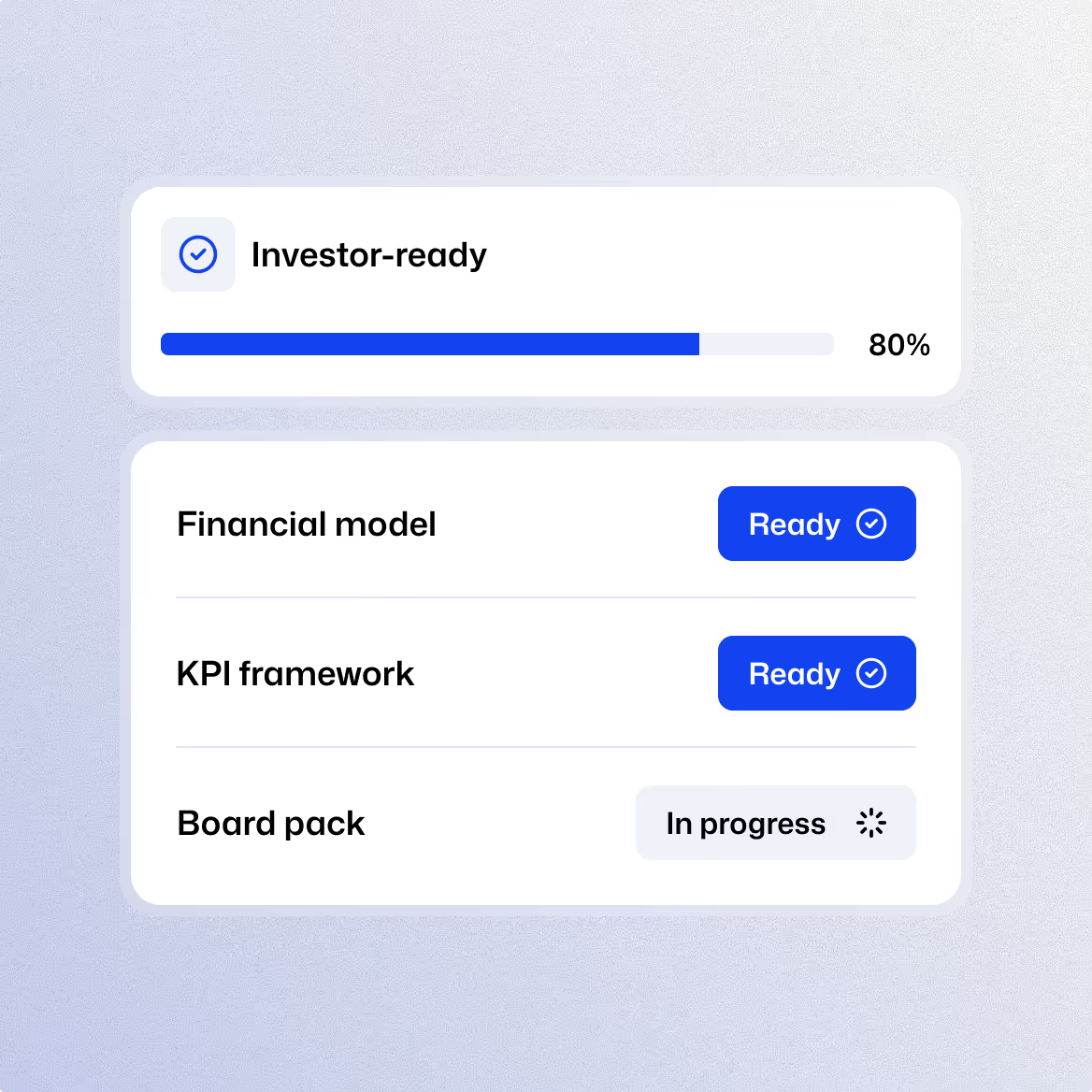
Due diligence doesn't forgive infrastructure gaps. It just prices them.
Numbers that don't reconcile across documents
Unit economics in the deck don't tie to the model. The model doesn't tie to management accounts. Investors notice immediately — and once they do, every subsequent conversation becomes about credibility, not value. The raise doesn't fail at this point. It just gets harder.
A data room that becomes a liability
Disorganized documentation, inconsistent metric definitions, and missing audit trails extend timelines and give investors leverage they shouldn't have. Structure and completeness are signals of governance quality — and investors know the difference.
Reporting built for operations, not capital markets
Management accounts run the business. They don't present it. Investor-grade reporting requires a different architecture — segment economics, cohort visibility, cash flow granularity, and a KPI framework that survives live Q&A. That gap doesn't close itself under deal pressure.
CFO bandwidth split across two processes
Running a raise while maintaining financial operations is a genuine capacity problem. We've seen it slow both processes. Your CFO leads the investor relationship. We own the infrastructure workstream behind it.
What changes when we're done
From current state to investor-ready in 16 weeks.
Diagnostic
We assess your financial model, reporting architecture, KPI definitions, and data room against the standard investors apply at your stage and sector. Every gap mapped and sequenced before work begins.
Infrastructure Build
Model restructure, KPI framework definition, reporting architecture — built in parallel. Everything aligned to a single version of the numbers before any external document is produced.
Data Room & Due Diligence Preparation
Data room structured, populated, and cross-referenced. Dry run completed with your finance and leadership team. You go into the process knowing exactly what investors will find — and the answer to every question they're likely to ask.
This service fits if
A transaction is planned within 12 months
Growth round, secondary, or structured financing. The financial infrastructure needs to be in place before the process launches — not rebuilt during it while investor conversations are live.
Your reporting wasn't designed for external scrutiny
Management accounts that work operationally often don't present the business at the level investors require. Segment economics, cohort analysis, and cash flow granularity need to be built — not improvised under deal pressure.
A previous process exposed gaps
Due diligence flagged inconsistencies in financial data, documentation, or reporting structure. Those gaps need to be closed before the next process begins. Investors in the next round may have seen the last process.
Your CFO needs the infrastructure workstream taken off their plate
Your CFO can lead the raise. They can't simultaneously rebuild the financial infrastructure behind it. You need a team that owns that workstream end to end — so the raise gets their full attention.
We've prepared financial infrastructure for fundraises across tech, logistics, and production businesses — PE-backed and founder-owned. The pattern is consistent: the raises that move fast have the infrastructure ready before the process starts.


Transformation starts with an honest assessment of where you actually are.
30 minutes. Bring your current reporting structure and we'll tell you where the gaps are and what fixing them would realistically take.
What CFOs ask before they engage
We have a bank running the process. What does incro add?
Your bank manages the investor relationship and the narrative. We make sure the financial infrastructure behind that narrative holds up under detailed scrutiny. Those are different workstreams — and gaps in one will stall the other. A CFO who spends the raise explaining why the model doesn't tie to the management accounts has already lost ground.
How far ahead of a raise should we engage?
Six to nine months before the process formally launches is the right window. It allows time to restructure reporting, establish clean historical data, correct any accounting policy issues that are affecting reported results, and run the model through stress testing before investors do it for you. Earlier is always better.
Can corrected accounting policies actually change our valuation?
Yes — materially. We've seen accounting policies that were incorrectly applied understating EBITDA by a meaningful amount. When those are corrected and documented correctly before the raise, they translate directly into valuation. The key is having those corrections in place — and defensible — before investors form their initial view of the numbers.
Do you work with our existing finance team?
Yes. We run the preparation workstream alongside your CFO and finance leadership. They maintain operational continuity and lead the investor relationship. We own the infrastructure — model, data room, KPI framework, due diligence preparation.