Finance Function Design
We redesign your finance function from the ground up — structure, roles, processes, and operating model — built for the complexity your business operates at today, and the scale it's moving toward.
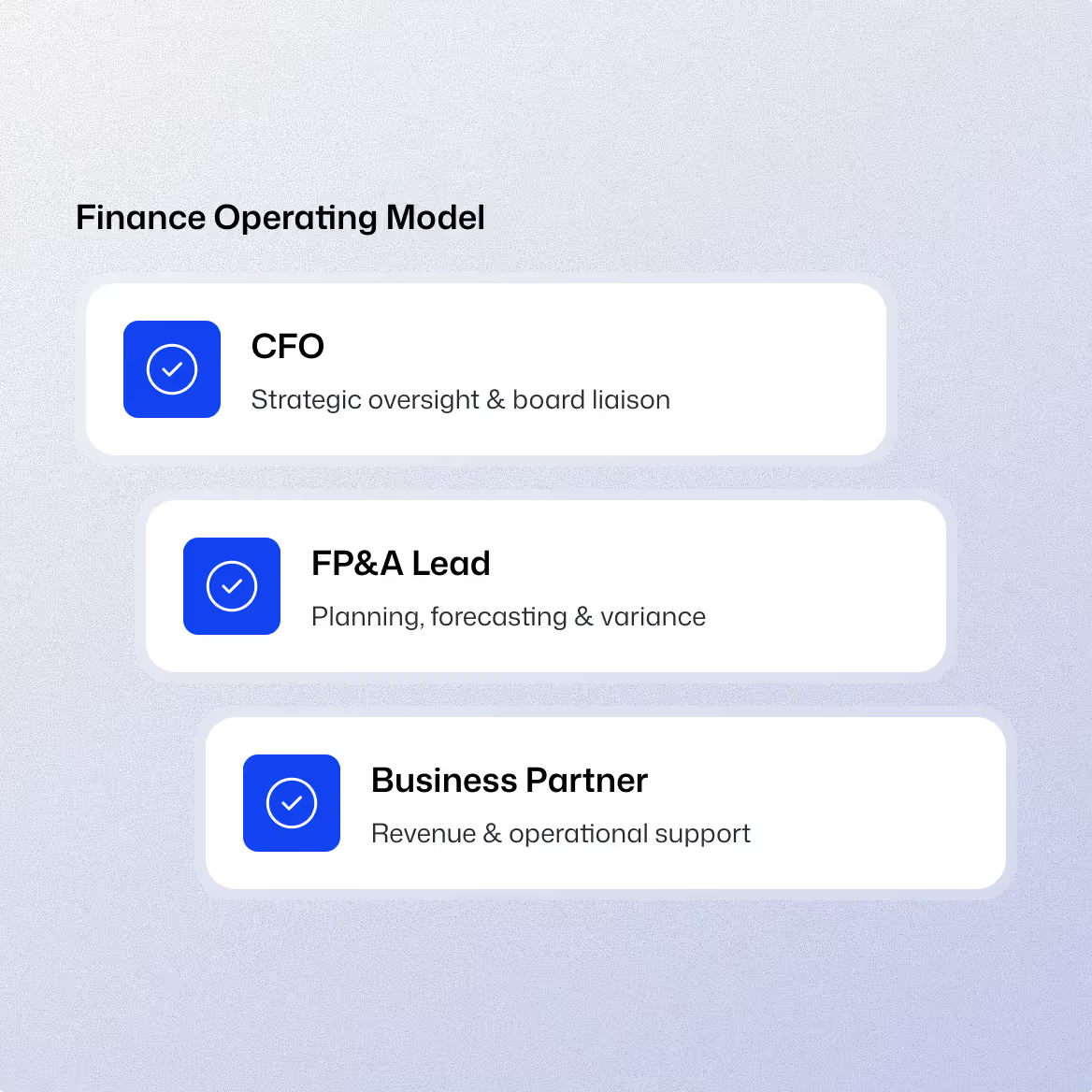
Finance functions that grow organically accumulate debt. Structural, process, and capability debt that compounds quietly — until a transaction or a board conversation makes it visible.
A structure built by accretion, not design
Roles were added as needs arose. Responsibilities shifted without being redefined. Reporting lines reflect history, not logic. The current structure works around its own gaps — and everyone in the function knows it, even if nobody has formally mapped it.
A business partner model that doesn't deliver
Finance is expected to support commercial and operational decision-making. In practice, the function spends the majority of its capacity on reporting cycles and close. Business partnering happens in the time left over — which is rarely enough to be meaningful.
Capability concentrated in too few people
Critical finance knowledge — consolidation logic, model architecture, close checklists, reporting definitions — sits with individuals rather than in documented processes. When those individuals are unavailable, the function doesn't operate properly. That's not a people issue. It's a design issue.
No operating model for what comes next
An acquisition, a new market, or a significant scale-up changes what the finance function needs to do. Without a deliberate redesign, the function extends again — adding headcount without adding capability, and compounding the structural problems that were already there.
What changes when we're done
From current structure to designed operating model in 6 weeks.
Current State Assessment
Structured interviews with CFO, finance leadership, and key business stakeholders. Current structure, roles, processes, and operating rhythm mapped against the demands the business actually places on the finance function.
Design & Validation
Target operating model designed. Organizational structure, role architecture, and finance calendar developed. Design validated with CFO and key stakeholders before documentation begins.
Operating Model Documentation & Implementation Planning
Full operating model documented. Implementation roadmap built — covering structural changes, process transitions, and hiring or capability development priorities. Transition sequenced to minimize disruption.
This service fits if
The finance function hasn't been deliberately designed
It grew as the business grew — roles added, responsibilities shifted, processes layered. It functions, but not efficiently. The structural problems are understood internally; a redesign has been discussed but not acted on.
A significant organizational change is planned
Acquisition, market entry, ownership change, or leadership transition. The finance function needs to be designed for what the business is becoming — not what it has been. New ownership in particular will expect a function that can operate at the level the business now requires.
Business partnering isn't working
Finance is valued for closing the books, not for shaping decisions. The function wants to do more — but the structure and operating model don't create the capacity or the interfaces to make it happen.
You're scaling and the current structure won't hold
Headcount, revenue, and complexity are growing. The current finance structure was designed for a smaller business and is already showing the strain. A deliberate redesign now prevents a more disruptive restructuring later — under more pressure, with less time.
Finance function design is the structural foundation that determines whether everything built on top of it — transformation programmes, technology, business partnering — actually delivers lasting change.


The finance function you have was built for a previous version of your business.
30 minutes. We'll tell you what a finance function design engagement covers and what it typically changes — structurally and operationally.
What CFOs ask before they engage
Is this essentially an org restructuring project?
Structure is one component — but the operating model covers considerably more. Processes, decision rights, business partnering interfaces, operating rhythm, close procedures, and capability architecture are all in scope. Structure without process and capability change rarely delivers lasting improvement. We design all three together.
How do you handle the people dimension — existing roles, sensitive changes?
We design the target operating model and transition path in close collaboration with the CFO and, where relevant, HR leadership. The sequencing of structural changes, role redefinitions, and capability development is managed to minimize disruption and maintain team stability throughout the transition. Findings are presented in terms of functional gaps, not individual performance.
How long does implementation take after the design is complete?
Design delivery takes six weeks. Full implementation — structural changes, process transitions, operating rhythm embedded — typically takes a further three to six months, depending on the scale of change and the pace the organization can absorb.
Can you support implementation as well as design?
Yes. Many clients engage us to support the implementation phase — particularly the process build, close infrastructure, and technology components. The design engagement establishes the blueprint. The implementation work makes it operational.