Exit Readiness & Preparation
We prepare your financial infrastructure, reporting quality, and documentation to the standard that maximizes optionality — and protects valuation when buyers look closely at the numbers behind the story.
Financial gaps discovered during a sale process don't stay quiet. They become negotiating points.
Numbers that don't survive scrutiny
Acquirers run detailed financial analysis. When management accounts don't reconcile, KPIs are inconsistently defined, or EBITDA adjustments lack documentation, valuation conversations shift from multiple to discount — and they rarely shift back.
Value created that isn't visible in the numbers
Operational improvements, cost efficiencies, and growth investments that don't show clearly in reported financials don't get credited in valuation. Accounting policies that were implemented incorrectly can further suppress reported results. If the story isn't in the numbers — correctly — it doesn't count.
Reporting that wasn't built for a buyer
Management reporting tells the story you need internally. A buyer needs a different view — clean segmental performance, normalized earnings, working capital trends, and auditable historicals going back three to five years. That view needs to be built before the process, not constructed during it.
A finance function that raises questions instead of confidence
Buyers assess financial infrastructure as a proxy for operational quality. Weak controls, manual processes, and undocumented policies aren't just operational issues — they become negotiating leverage. The quality of your finance function is part of what's being bought.
What changes when we're done
From current state to exit-ready in 16 weeks.
Financial Diagnostic
We assess current reporting quality, historical financial statements, KPI definitions, accounting policies, and documentation completeness against the standard acquirers apply in your sector. Every gap identified before work begins — including the ones that would surface under buy-side scrutiny.
Financial Infrastructure Build
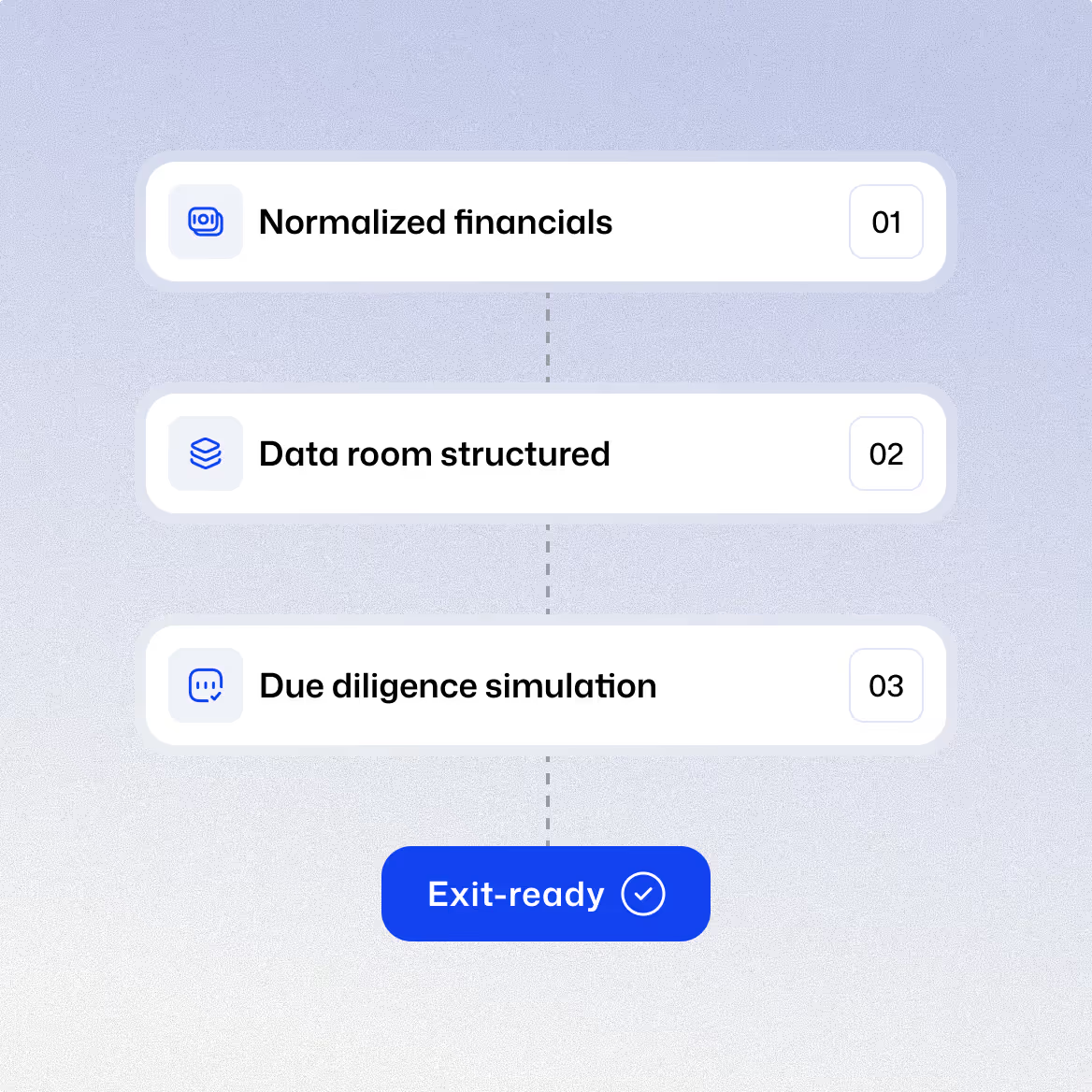
Normalized financials, segmental reporting, and KPI framework built in parallel. Accounting policy corrections implemented and documented. Working capital analysis completed. Every output cross-referenced and traceable.
Data Room & Process Preparation
Data room structured and populated. Finance function documentation completed. Management team briefed and prepared for the financial questions a buy-side process generates — before buyers ask them.
This service fits if
A sale or partial exit is planned within 18 months
Trade sale, PE buyout, or secondary transaction. Financial infrastructure needs to be in place well before advisors are appointed and buyers are engaged. Preparation started too late is preparation that doesn't hold under pressure.
Your financials don't fully reflect business performance
One-off costs, investment periods, or incorrectly applied accounting policies mean reported numbers understate underlying earnings. Those issues need to be documented and corrected — not explained reactively when a buyer asks why EBITDA looks the way it does.
A previous process stalled on financial due diligence
Buyers raised questions your finance team couldn't answer cleanly. The gaps that slowed the last process need to be closed — and documented — before the next one begins.
You want to control the financial narrative
Buyers form a view of your business from the numbers before they form one from the conversation. The structure, quality, and accuracy of your financial reporting shapes that view — before you're in the room.
Exit preparation isn't a documentation exercise. It's the process of ensuring that the value your business has created is fully visible, correctly stated, and fully defensible when it matters most.


By the time buyers are in the room, the financial story is already set. Make sure it's the right one.
30 minutes. We'll tell you where your financial infrastructure stands relative to what a serious sale process requires — and what a buyer is likely to find if the process started today.
What CFOs ask before they engage
We have M&A advisors. What does incro add?
Your advisors manage the process and buyer relationships. We make sure the financial infrastructure behind the process — reporting quality, data room, normalized financials, accounting policy corrections — holds up under detailed buy-side scrutiny. Those are different workstreams. Weakness in one affects outcomes in the other, and your advisors will tell you the same thing.
How early should we start?
Twelve to eighteen months before a process launches is the right window. Earlier preparation means cleaner historicals, more time to address accounting policy issues that affect reported results, and significantly less pressure to make structural decisions under active deal timelines. Most sellers who regret timing regret starting too late, not too early.
Can corrected accounting policies actually affect the sale price?
Materially, yes. We've seen accounting rules that were incorrectly implemented understating reported EBITDA in ways that directly suppressed valuation. When those are corrected — and documented correctly — the impact on valuation at exit can be significant. That work needs to happen before the process, not explained as an adjustment during it.
Do you work with our auditors and M&A advisors?
Yes. We coordinate with your audit firm, legal advisors, and M&A bank to ensure financial outputs are consistent across workstreams. Clean alignment between advisors is itself a signal of process quality — and buyers notice when it's absent.